Examples
A showcase of programs PXX compiles today: small Pascal demos, terminal and GUI
applications, Python (NilPy) programs, ESP32 firmware, and real third-party C
code such as BusyBox, SQLite, zlib and Lua. The sources for the demos live
under examples/ in the checkout.
Every entry on this page was compiled and run. Nothing is listed on the strength of a test that once passed or a claim in another document.
Last checked 2026-09-29 with pin v450 (sha256
c19cc2d531e4…) on an x86-64 Linux host, from the v0.1.0-beta.1 release archive after./install.sh --yes, each program built with the./pxxcommand shown on this page. Every batch and parallel program below ran and gave the result in its row, the maze, chess, kiosk andnilshoutput matches what is quoted, and the 12 Nil Python programs underexamples/shell/andexamples/tk/built. The binary sizes in the batch table are from that run, and each rounds to the same figure as with v449.make demosbuilt all 36 Pascal programs underexamples/with v449 and with v450. The ESP32 QEMU runs were redone with v449; eight of them again with v450 (see All 36 ESP32 examples). Rows that were measured on an earlier pin say which: the C and Pascal library rows and the ESP32 board runs. The terminal and GTK screenshots, and the Eliah IDE's, were retaken on 2026-09-28 with pin v450 (sha256c19cc2d531e4…), from programs built bymake demoswith that pin. A later pin may behave differently in either direction; re-run a command to check.Earlier passes: v423 (2026-09-24), v424 and v425 (2026-09-25), and v441, the beta 0.1 compiler (2026-09-27). On each, the batch and parallel programs printed the same output as on v423, apart from timing figures.
Quick start
./install.sh --yes      # checks the pinned compiler, writes the ./pxx wrapper
./demos.sh list         # the launcher's menu
./demos.sh all          # build every demo, run the batch ones
With pin v450 ./demos.sh all reported
27 built, 0 failed (16 batch ran; tty/gui built-only). The launcher's menu
is a curated 27. make demos builds the complete set of 36 programs under
examples/ (esp32 excluded), and all 36 built with v449 and with v450.
To build one program yourself:
./pxx examples/json/jsondemo.pas /tmp/jsondemo
/tmp/jsondemo
Programs that use parallel for need --threadsafe, and the compiler refuses
them without it:
./pxx --threadsafe examples/parallel/primecount.pas /tmp/primecount
PXX writes its own ELF executables and needs no external linker. Programs that don't use a system GUI library come out as a single static file with no dynamic loader, and the hello-world is 4,536 bytes. The GTK, OpenGL and SDL2 programs below link those system libraries dynamically.
Pascal: batch programs
Each of these runs to completion and checks its own result. The ones marked ALL OK compare against built-in expected values and print a verdict.
| Program | Source | What it shows | Result on the verification run | Binary |
|---|---|---|---|---|
| hello | examples/hello/hello.pas |
The smallest program | Greetings from PXX |
4.4 KB |
| primes | examples/primes/sieve.pas |
Bit-packed sieve of Eratosthenes | 78,498 primes ≤ 1,000,000 | 103 KB |
| sudoku | examples/sudoku/sudoku.pas |
Backtracking solver | three puzzles solved | 29 KB |
| factorial | examples/bignum/factorial.pas |
Big-integer factorial | 1000! has 2,568 digits | 111 KB |
| bigmath | examples/bignum/bigmath.pas |
Arbitrary-precision arithmetic, modular power | ALL OK | 140 KB |
| json | examples/json/jsondemo.pas |
JSON parse and emit, escapes, Unicode | ALL OK | 518 KB |
| sat | examples/sat/satdemo.pas |
DPLL SAT solver, including pigeonhole UNSAT | ALL OK | 117 KB |
| mathf | examples/mathf/mathdemo.pas |
Floating-point math library | every check ok |
187 KB |
| maze | examples/maze/maze.pas |
Maze generation and solving | seeded maze with solved path | 107 KB |
| mandelbrot | examples/mandelbrot/mandelbrot.pas |
ASCII Mandelbrot set | ALL OK (checksum) | 141 KB |
| raytracer | examples/raytracer/raytracer.pas |
Ray tracer, headless | ALL OK (checksum) | 561 KB |
| vm | examples/vm/vmdemo.pas |
Tiny bytecode VM and assembler | ALL OK | 128 KB |
| calc | examples/calc/calcdemo.pas |
Expression evaluator, including rejects | ALL OK | 110 KB |
| lisp | examples/lisp/lispdemo.pas |
Lisp with closures and a cell arena | ALL OK | 122 KB |
| httpdemo | examples/net/httpdemo.pas |
HTTP server and client on one coroutine reactor (loopback, no network needed) | three requests, cookie and gzip | 608 KB |
The maze demo draws its own solution:
#########################
#*#   #                 #
#*# ### ######### ##### #
#*#   # #*******#     # #
#*# # # #*#####*### # # #
#*# #   #*#***#***# # # #
#*##### #*#*#*###*### # #
#*****# #***#*# #***# # #
#####*# #####*# ###*# ###
#   #*#     #*#*****#   #
# ###*##### #*#*####### #
#*****#     #*#*#  ***# #
#*####### ###*#*###*#*# #
#*#*****# #***#*****#*# #
#*#*###*###*#########*# #
#***#  *****#        ***#
#########################
seed 12345  size 12x8  path cells = 49
The HTTP demo runs a server and a client in one process:
GET /        -> 200 OK
  body:   Welcome to pxx net
  cookie: sid=demo123
GET /me      -> 200 OK  (cookie sent back)
  body:   hello sid=demo123
GET /data.gz -> 200 OK  (gzip, decoded transparently)
  body:   hello world
done
Pascal: parallel programs
uses palparallel gives parallel for loops with reductions and a choice of
work distribution. Build these with --threadsafe.
| Program | Source | What it shows |
|---|---|---|
| primecount | examples/parallel/primecount.pas |
Even load: prime count over 2..2,000,000 |
| collatz | examples/parallel/collatz.pas |
Very uneven load, where on-demand distribution pays off |
| pow | examples/parallel/pow.pas |
Compute-bound hashing, near-linear scaling |
| membw | examples/parallel/membw.pas |
Memory-bound against compute-bound reduction |
| mandelbrot_parallel | examples/mandelbrot/mandelbrot_parallel.pas |
The Mandelbrot set rendered row by row on every core, then serially; the two checksums must match (CHECKSUM MATCH). --ppm FILE also writes the image |
Each program checks that every distribution produces the same answer as the
serial loop. With v449, and again with v450 on 2026-09-29, all five printed
their ALL AGREE or CHECKSUM MATCH line. primecount with v450:
Prime count over 2..2000000   workers=12
primes     = 148933   max gap = 132
serial     : 4568576 us
pdChunked  : 1483192 us   speedup 308 /100x
pdOnDemand : 1522016 us   speedup 300 /100x
(even load: pdChunked ~= pdOnDemand here, unlike collatz)
ALL AGREE — count matches pi(LIMIT), reductions identical across distributions
The timings come from a shared 12-core machine that was busy with other work, so read the speedups as indicative only. The correctness line is the claim.
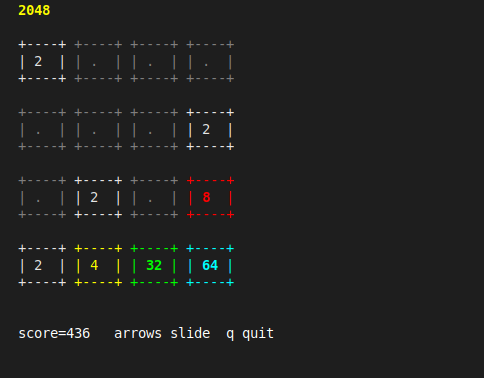
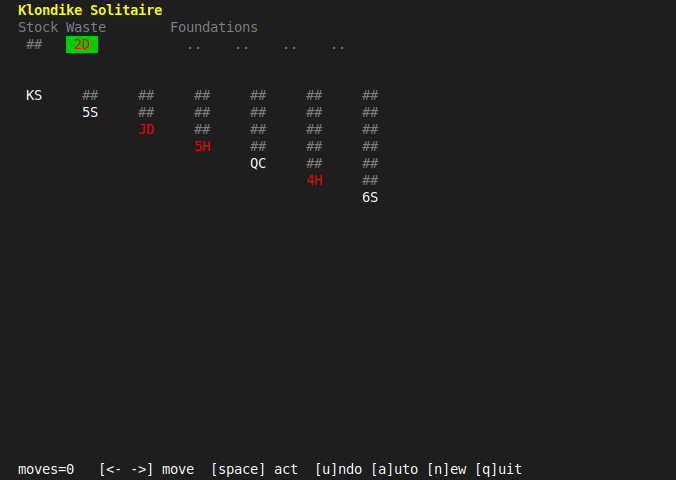
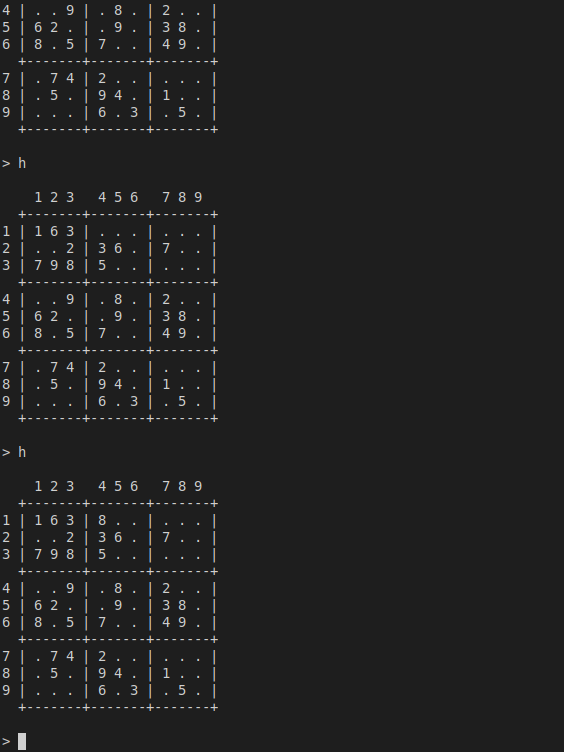
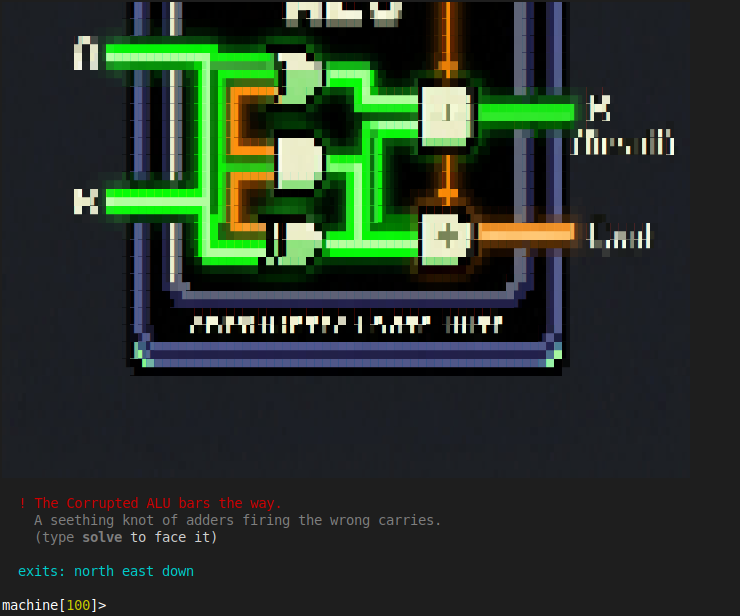
Pascal: terminal applications
Full-screen terminal programs using PXX's own terminal units: no curses and no
C library. The screenshots were captured from each program running in an
xterm, driven by scripted keystrokes.
| Program | Source | |
|---|---|---|
| 2048 | examples/g2048/console_2048.pas |
 |
| Klondike solitaire | examples/solitaire/console_solitaire.pas (build with -Fuexamples/solitaire_gui, where its card engine lives; ./demos.sh does this) |
 |
| Sudoku game | examples/sudoku/sudoku_game.pas |
 |
| Text adventure | examples/adventure/adventure.pas (run from examples/adventure/, it reads world.dat) |
 |
| Menu widgets | examples/tui/menudemo.pas |
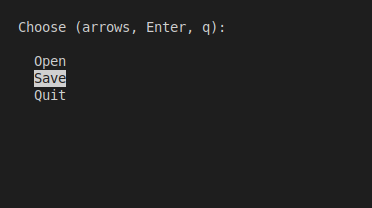 |
| File browser | examples/fm/fm.pas (fm --interactive [path]; with no flag it renders once and exits) |
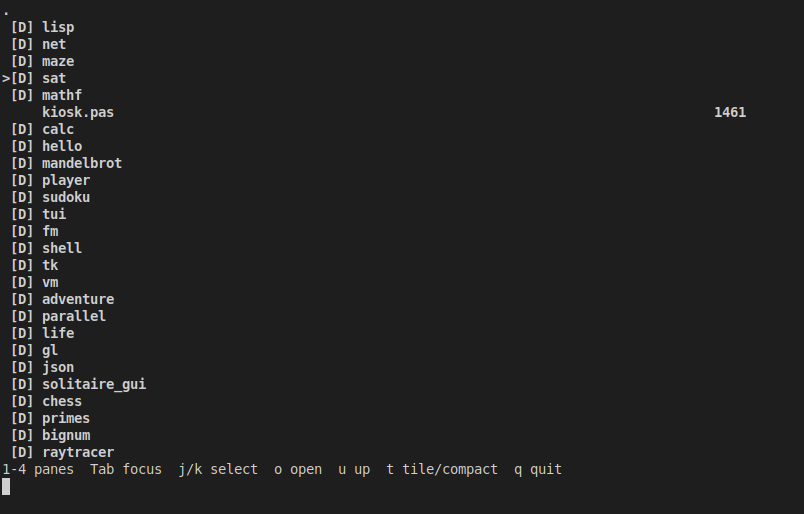 |
| Mandelbrot zoom | examples/mandelbrot/mandelzoom.pas: animated truecolor zoom using integer asm kernels on all cores (build with --threadsafe) |
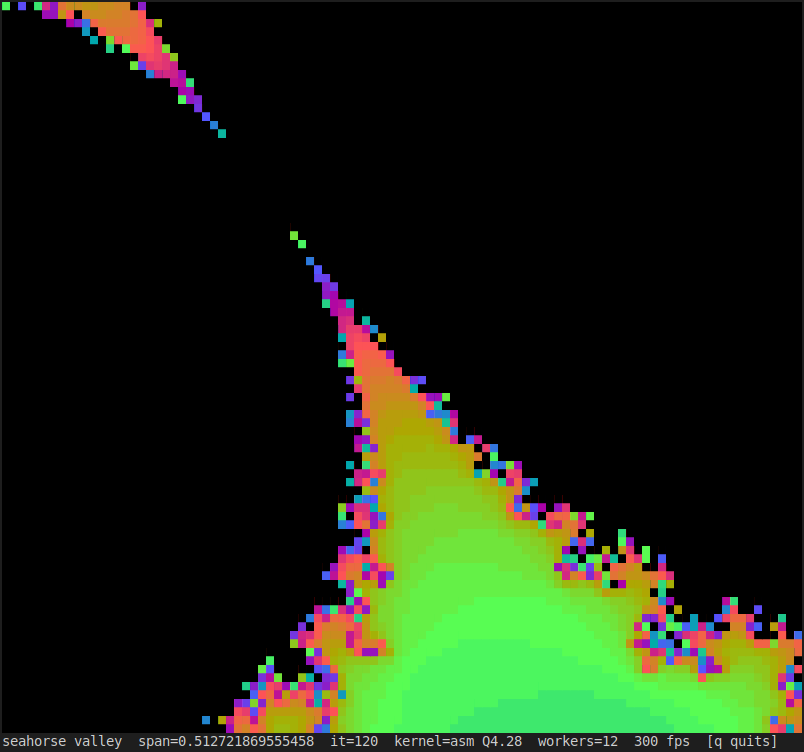 |
| Video player | examples/player/player.pas: player <video>, decodes through an ffmpeg child process and draws in truecolor blocks. Shown playing FFmpeg's testsrc2 test pattern |
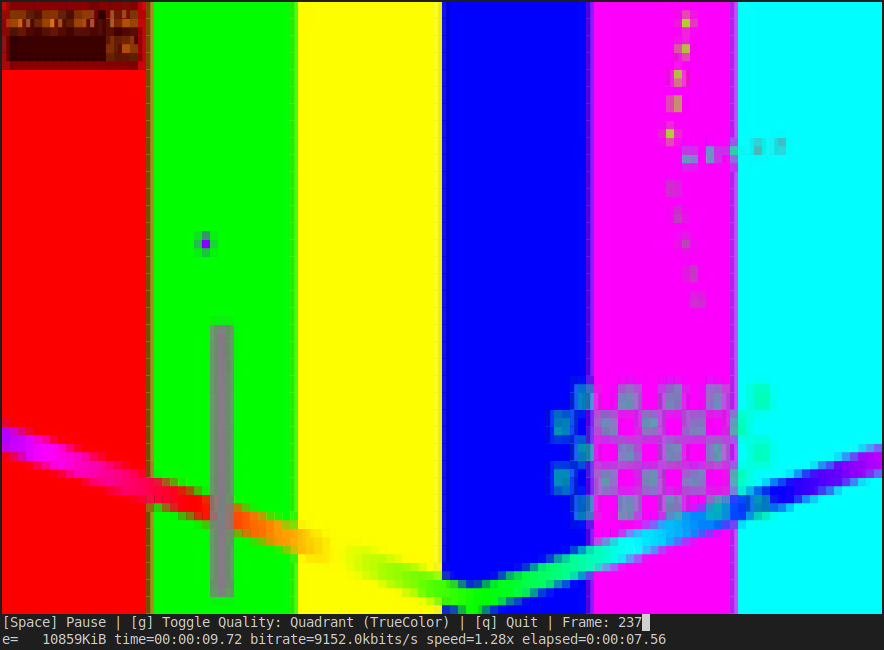 |
The chess engine (examples/chess/chess.pas) and the kiosk are
line-oriented, so they are shown as text. At start-up the engine prints the
board, its move-generation counts (perft), which match the published values
for the start position, and its opening choice. It then takes commands
(print, fen, perft <n>, go <depth>, quit):
PXX chess demo

8  r n b q k b n r
7  p p p p p p p p
6  . . . . . . . .
5  . . . . . . . .
4  . . . . . . . .
3  . . . . . . . .
2  P P P P P P P P
1  R N B Q K B N R
   a b c d e f g h
White to move

perft(1) = 20
perft(2) = 400
perft(3) = 8902
perft(4) = 197281

bestmove e2e4  score 10  nodes 40793
chess>
examples/kiosk.pas is the small program that runs inside the
minimal Linux system:
kiosk> about
pxx self-hosting Pascal compiler, static, no libc.
kiosk> sum 100
sum 1..100 = 5050
kiosk> primes 50
primes below 50 = 15
Pascal: GUI applications
GTK 3 applications, two of them drawing with OpenGL. These need the GTK 3 development headers and libraries on the build host. The screenshots were taken on a virtual X display with software OpenGL, so the render times and frame rates shown inside them are not representative of a real GPU.
| Program | Source | |
|---|---|---|
| OpenGL triangle | examples/gl/triangle.pas |
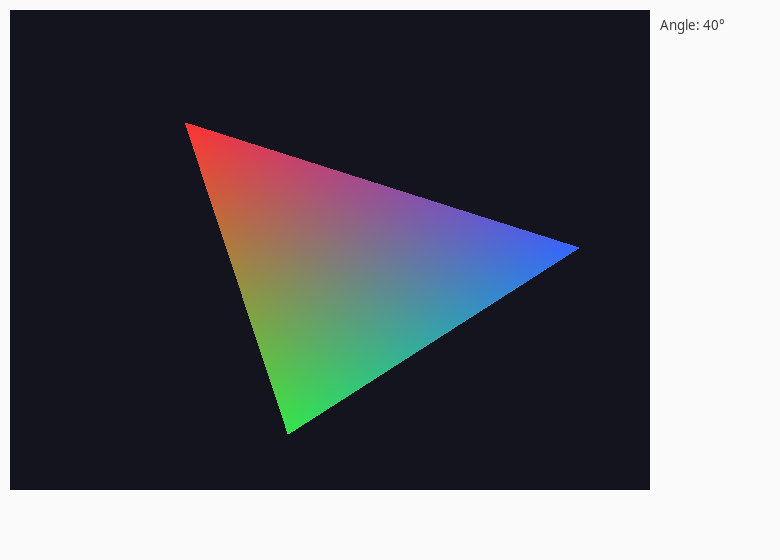 |
| Game of Life | examples/life/life.pas |
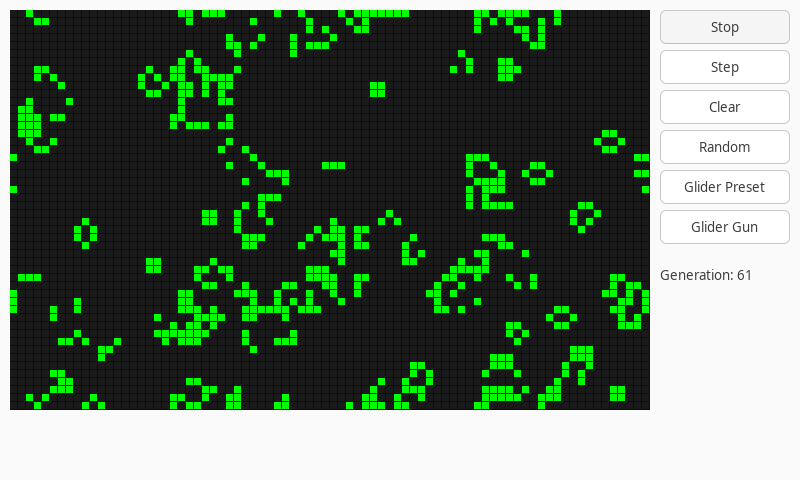 |
| Mandelbrot explorer | examples/mandelbrot/mandelbrot_gui.pas: drag to pan, click to zoom, rendered on every core |
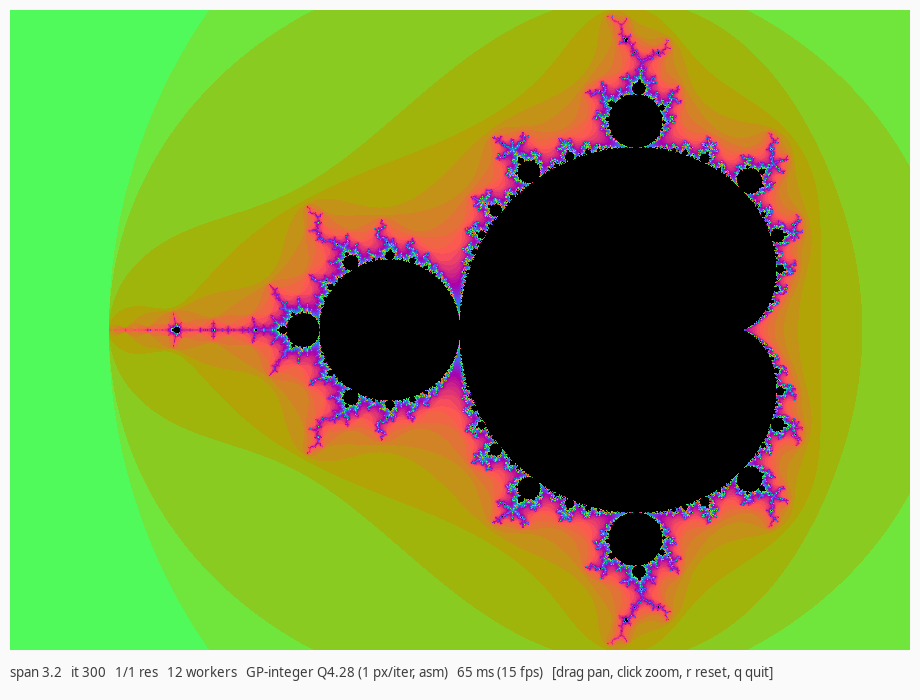 |
| Ray tracer | examples/raytracer/raytracer_gui.pas: reflective spheres, interactive camera |
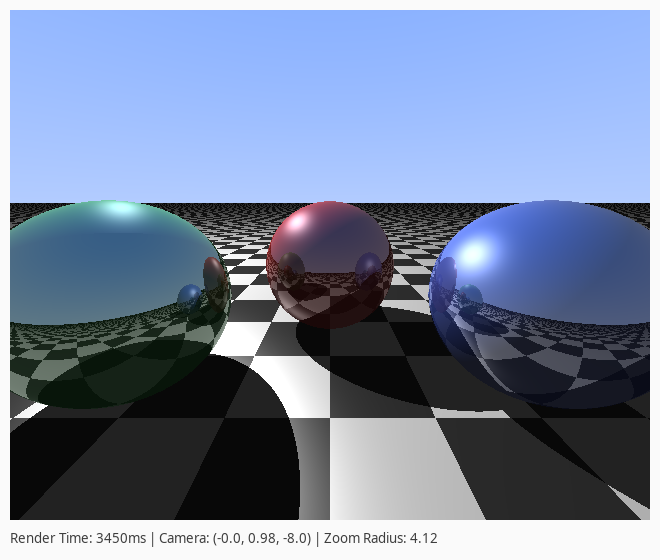 |
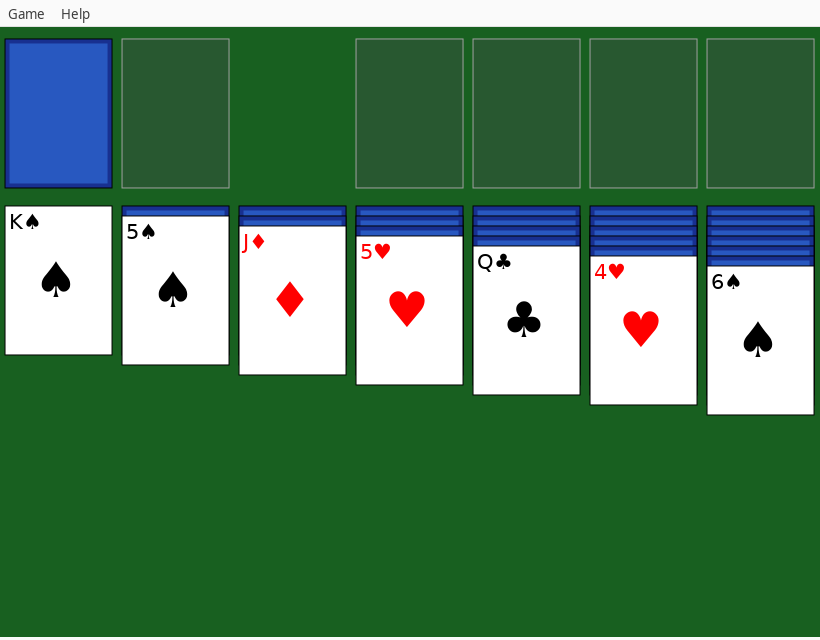
| Solitaire | examples/solitaire_gui/solitaire_gui.pas |
 |
The Eliah IDE
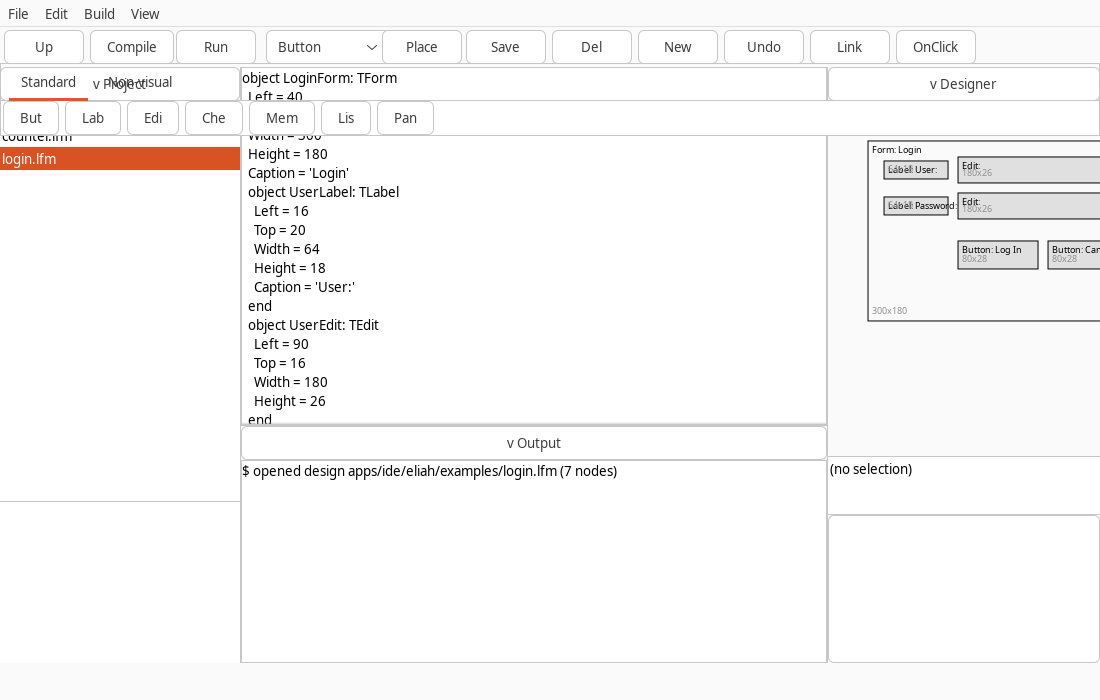
apps/ide/ is a larger application built with PXX: a single-window IDE,
Lazarus- and Delphi-inspired but deliberately stripped down, with everything
tiled into one window. It is early work and the layout still shows it. It also
doubles as a real-world stress test for the compiler. It builds in about nine
seconds, and its headless core test reports 323 passed, 0 failed with pin
v450. A second face for ESP32 boards, the ESP32 IDE,
shares the same core.
apps/ide/build.sh       # builds apps/ide/eliah/eliah with the pinned compiler
apps/ide/test.sh        # the render-agnostic core, tested without any GUI
The components use a Hebrew naming scheme. Every name transliterates a word tied to the prophet Elijah and the theme of testimony:
| Name | Hebrew | Meaning | Role |
|---|---|---|---|
garin |
גרעין | kernel / core | The render-agnostic engine: editor buffer, project model, the designed-form document and the builder. Both faces grow from this seed. |
eliah |
אליה | Elijah | The GTK face: the graphical IDE window. |
ilja |
איליה | Elijah | The ANSI/TUI face: the same prophet, a second face. |
bochan |
בוחן | examiner | The headless test driver for garin. It links no GUI or TUI face, which proves the core is render-agnostic. |
eduth |
עדות | testimony | The validator bochan reports to. It witnesses results, tallies pass and fail, and gives a verdict. |
Python (NilPy)
NilPy is PXX's Python-shaped frontend. It compiles a static subset of Python straight to machine code, with no interpreter at run time. Compatibility runs one way: a program in the supported subset should give CPython's answers, and NilPy also accepts some things CPython rejects. It is younger than the Pascal frontend and has known gaps.
nilsh: a BusyBox-style shell
examples/shell/nilsh.npy is a single binary whose commands are built-in
applet functions, with no fork and no exec. The same source is meant to run as
a Linux process or as an ESP32 task set. It plays a scripted session; the
block below is part of it, in order (the full session runs 15 commands):
./pxx examples/shell/nilsh.npy /tmp/nilsh && /tmp/nilsh
$ help
applets: echo cat ls wc head tail grep upper rev help
$ echo one two three | wc
1 3 13
$ echo nilsh | upper
NILSH
$ echo nilsh | rev
hslin
$ echo alpha beta | cat | upper
ALPHA BETA
examples/shell/shell0.npy is the first phase of the same shell, kept as a
smaller example: tokenize, dispatch, applet, over a canned script.
tkinter: GUI programs in Python
examples/tk/ holds ten Nil Python programs written against PXX's tkinter
module (lib/pcl/tkinter.pas). It binds the system Tcl/Tk 8.6 directly, so it
needs libtk8.6 at run time but no development headers. Widgets are objects
that take keyword options, as in CPython's tkinter. Underneath, each call is
one Tcl command. examples/tk/hello.npy and widgets.npy use the thinner
tk.pas layer directly.
./pxx examples/tk/widgets.npy /tmp/widgets && /tmp/widgets
| Program | What it shows |
|---|---|
hello.npy |
A window and a label through tk.pas |
widgets.npy |
ttk label, entry, text and button; reads each back |
tkinter_facade.npy |
Widget objects with keyword options, a StringVar |
callbacks.npy |
A bound method, a plain function and a lambda as commands; a variable trace |
kwargs.npy |
Keyword arguments bind by name, including set, file, index |
field_class_identity.npy |
A widget stored in a field keeps its class |
facade_and_paths.npy |
tk.END, a Text widget, pathlib-style paths |
import_in_body.npy |
import inside a function body |
shadow_format_except.npy |
A method calling the module function it shadows, str.format, a qualified except |
htmlview.npy |
tkhtmlview: HTML rendered into a Tk text widget, checked by reading the text back |
With pin v449 all ten built and ran under Xvfb. The three that ship a
.expected file (callbacks, field_class_identity, tkinter_facade)
matched it exactly, and the others printed their ok line. The programs close
their own windows within half a second, so a headless run ends by itself.
The folder's one Pascal file, uses_tkinter_and_configparser.pas, is a
regression program rather than a demo. It checks that the Tk Text widget
does not capture the RTL's Text file record, and prints both ok.
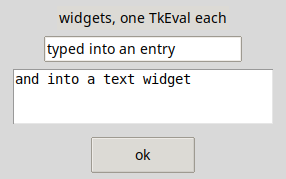
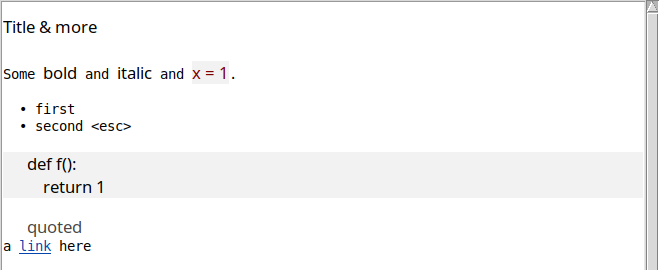
For these two screenshots the programs were held open longer. widgets.npy
closed after 5 seconds instead of 0.4. In htmlview.npy a mainloop() with a
5-second close timer replaced its read-back checks. Taken 2026-09-28 with pin
v449 on Xvfb, with no window manager, so the windows have no title bar.
lekkerzeilen: a 3D sailing simulator
lekkerzeilen is a separate project: a boat simulator on the real Dutch rivers,
built from open elevation, building and waterway data and rendered with SDL2
and OpenGL. It is written in ordinary Python and runs under CPython through
ctypes. The same source compiles with PXX to a native binary that talks
to SDL2 and OpenGL directly. It compiles to about 11.6 MB of machine code with
one command, run from the PXX checkout with the lekkerzeilen checkout beside
it (lekkerzeilen's own runbin.sh does the same):
stable_linux_amd64/default/pinned --threadsafe \
    -dSDL_DISABLE_IMMINTRIN_H -dGL_GLEXT_PROTOTYPES \
    ../lekkerzeilen/lekkerzeilen/__main__.py ../lekkerzeilen/bin/lekkerzeilen
The binary looks for its world/ data relative to its own location, so keep
it in the project's bin/ directory.
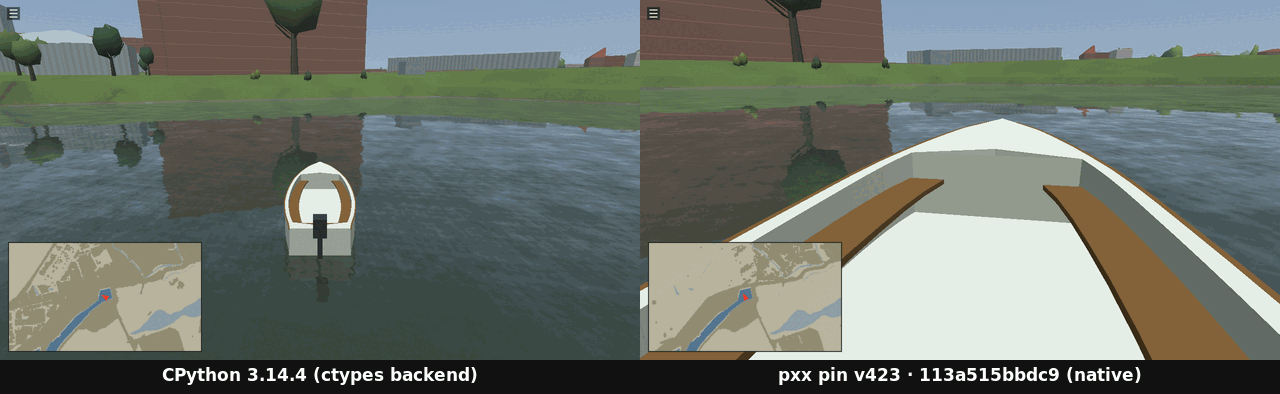
Both screenshots show the same built scene, the same launch and the same
1280×720 window. They were taken on 2026-09-24, from lekkerzeilen commit
9db2e38 without changes, on the PXX side built with pin v423. Each is a
single frame captured shortly after start-up, which is why the camera views
differ.
It compiles and runs. It is not yet as fast as CPython. A frame rate there is
a property of the scene. The project's own measurement on the world/roofs
region (4 tiles), the scene the demo starts in, is PXX 1.89 fps against
CPython 37.1 fps: the median over 20-frame windows of 150-second runs, with
audio and vsync on, on one machine, one program at a time. Other scenes
behave very differently, and no other lekkerzeilen frame rate is current.
That measurement was taken by the
lekkerzeilen project on pin v416, not re-run for this page. That
measurement's own notes list compiler fixes that landed after v416, so a figure
from a later pin may differ. The gap is the work in progress; the result that stands is
that a large 3D Python application with sound builds into one native binary
and runs.
ESP32
PXX cross-compiles to the ESP32-S3 (Xtensa LX7), the ESP32-C3 (RISC-V) and
the classic ESP32 (Xtensa LX6). The ESP32-S2 compiles, but nothing has run on
it. A program becomes a relocatable object that the normal ESP-IDF build links
as app_main. That includes a Python program, which becomes machine code on
the chip with no interpreter. The examples live in examples/esp32/, one
ESP-IDF project per program and chip, each with a README.md naming its chip
and language. To build and flash one yourself, follow
Getting started on the ESP32; the units they use
are documented in ESP32 peripherals. The per-chip
compiler details are in ESP32 / Microcontrollers.
All 36 ESP32 examples
"Board" is the most recent run on real silicon recorded on this page, and its section below gives the compiler. "QEMU" is Espressif's emulator: it has no ESP32-S2 machine, delivers no GPIO input edges, samples no real ADC and has no Wi-Fi radio, so the rows that need those have no QEMU run. The four newest classic-ESP32 ports ran on a board with pin v448; two of them fail there and are kept as reproducers (see On a classic ESP32).
| Example | Chip | Language | What it does | QEMU, pin v449 | Board |
|---|---|---|---|---|---|
| hello-s3 | S3 | Pascal | Prints five lines and a sum | pass | S3, 2026-09-28 |
| hello-c3 | C3 | Pascal | The same, on RISC-V | pass | C3, 2026-09-28 |
| hello-esp32 | classic | Pascal | The same, on the LX6 | – | classic, 2026-09-27 |
| hello-s2 | S2 | Pascal | The same, for the S2 | – (no S2 machine) | not run: builds only |
| nilpy-s3 | S3 | Python | A class, a list, a loop, print; output equals CPython's |
pass | S3, 2026-09-28 |
| nilpy-c3 | C3 | Python | The same source | pass | C3, 2026-09-28 |
| nilpy-esp32 | classic | Python | The same source | – | classic, 2026-09-27, and again with pin v448 |
| nilpy-hw-s3 | S3 | Python | Drives a GPIO pin; an ESP-IDF timer calls back into Python | pass | S3, 2026-09-28 |
| nilpy-hw-c3 | C3 | Python | The same source | pass | C3, 2026-09-28 |
| nilpy-hw-esp32 | classic | Python | The same source | – | classic, pin v448: fails, a watchdog reboot loop before its first line. A reproducer |
| timer-s3 | S3 | Pascal | A periodic esptimer callback, five ticks |
pass | S3, 2026-09-28 |
| timer-c3 | C3 | Pascal | The same source | pass | C3, 2026-09-28 |
| timer-esp32 | classic | Pascal | The same source | – | classic, pin v448: matches main.expected |
| isrctx-c3 | C3 | Pascal | Interrupt context versus task context | pass | C3, 2026-09-28 |
| fs-c3 | C3 | Pascal | FAT on flash: write, seek, read back | pass | C3, 2026-09-28 |
| dns-c3 | C3 | Pascal | lwIP's resolver through dns_libc |
pass | C3, 2026-09-28 |
| net-c3 | C3 | Pascal | Sockets on lwIP, over loopback | pass | C3, 2026-09-28 |
| gpio-c3 | C3 | Pascal | A probe: reads follow writes, pull-up, edges | pass | C3, 2026-09-28 |
| gpio-edge-s3 | S3 | Python | GPIO edge interrupts handled in Python | – (no input edges) | S3, 2026-09-28 |
| gpio-edge-c3 | C3 | Python | The same source | – (no input edges) | C3, 2026-09-28 |
| gpio-edge-esp32 | classic | Python | The same source | – (no input edges) | classic, pin v448: fails, the same reboot loop. A reproducer |
| adc-s3 | S3 | Python | Continuous ADC sampling, frames handled in Python | – (no ADC) | S3, 2026-09-28 |
| adc-c3 | C3 | Python | The same, plus pull-up and pull-down reads | – (no ADC) | C3, 2026-09-28 |
| monitor-s3 | S3 | Python | Sensor monitor: ADC, BOOT button, free heap | – (no ADC) | S3, 2026-09-28 |
| rgb-s3 | S3 | Pascal | Rainbow fade on the devkit's WS2812 LED, through RMT | – | S3, 2026-09-28 |
| pwm-s3 | S3 | Pascal | PWM, read back by the same chip | – | S3, 2026-09-28 |
| uart-s3 | S3 | Pascal | UART1 to its own receiver | – | S3, 2026-09-28 |
| uart-esp32 | classic | Pascal | The same source | – | classic, pin v448: 10 of 13 checks; see below |
| i2c-s3 | S3 | Pascal | I2C with the second controller as the device | – | S3, 2026-09-28 (empty bus only) |
| spi-s3 | S3 | Pascal | SPI master, no device | – | S3, 2026-09-28 |
| nvs-s3 | S3 | Pascal | Settings that survive a reboot, over four boots | – (needs a reset) | S3, 2026-09-28 |
| wifi-ap-s3 | S3 | Pascal | Wi-Fi access point and a Pascal web server | – (no radio) | S3, 2026-09-28 (no client joined) |
| wifi-ap-c3 | C3 | Pascal | The same | – (no radio) | C3, 2026-09-28: an S3 joined and loaded the page |
| nilpy-station-s3 | S3 | Python | Access point and a status page, in Python | – (no radio) | S3, 2026-09-28 |
| nilpy-station-c3 | C3 | Python | The same source | – (no radio) | C3, 2026-09-28 |
| nilpy-logger-s3 | S3 | Python | MicroPython-style Wi-Fi data logger: setup AP, CSV on flash, HTTP | – (no radio) | S3, 2026-09-28 |
The same folder opens in the ESP32 IDE
(./espide.sh), which detects the chip and builds and flashes with one button:
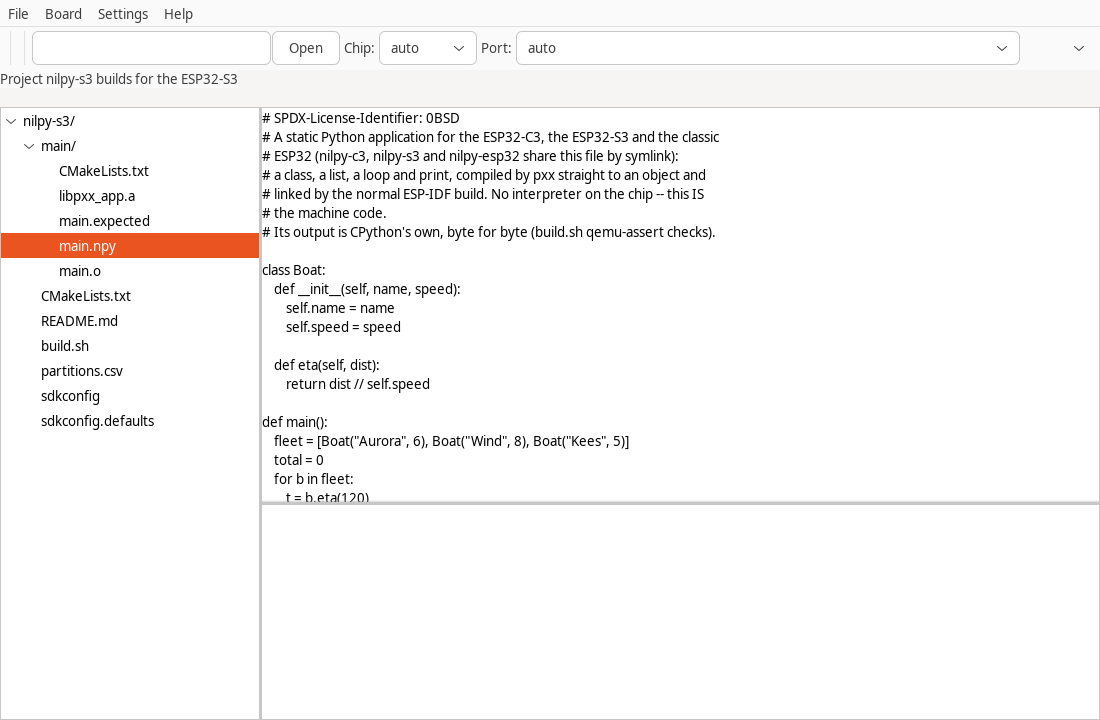
The IDE was built with pin v449 and captured on Xvfb on 2026-09-28. The rows under the toolbar that name the host's ESP-IDF path and the serial numbers of the attached boards were blanked in the image.
A Python sensor monitor on an ESP32-S3
examples/esp32/monitor-s3/main/main.npy is a sensor monitor written in
Python and compiled to Xtensa machine code: there is no interpreter on the
chip. Once a second it:
- averages the ADC samples streamed in the background;
- keeps a short history in a list and its statistics in a dict;
- counts presses of the BOOT button;
- prints one line with the chip's own free heap.
The ADC and button interrupts are handled in Pascal (espadc, espgpio),
and the Python handlers run afterwards in the main task, so they are ordinary
code. This is the core of the program, shortened: ... and the missing
constants, state and helpers are in the full file,
examples/esp32/monitor-s3/main/main.npy, which is the one to build.
import time
import interrupts
import 'espadc.pas' as adc
import 'espgpio.pas' as gpio
import 'espsys.pas' as sys

def on_button(ev):
    state["presses"] += 1
    print(f"button pressed ({state['presses']} so far)")

def main():
    interrupts.on_event(interrupts.INT_SRC_ADC, on_frame)
    interrupts.on_event(interrupts.INT_SRC_GPIO, on_button)
    gpio.gpio_input(BUTTON)
    gpio.on_falling(BUTTON)
    print("adc start", adc.start(ADC_CHANNEL, SAMPLE_HZ))
    for tick in range(1, REPORTS + 1):
        time.sleep(1)
        stats = summarize(collect())
        ...
        print(f"#{tick:3d} mean {stats['mean']:4d} range {stats['min']}..{stats['max']}"
              f" trend {trend:7s} frames {state['frames']} free {sys.free_heap()}")
Build and flash it with the ESP-IDF toolchain loaded (Getting started on the ESP32 has the setup):
tools/esp_flash.sh --project examples/esp32/monitor-s3 --port /dev/ttyACM0 --no-verify --seconds 15
The soak on the board. It was run with REPORTS raised from 10 to 240 and
captured over serial for 262 seconds. It printed 193 reports, and the free heap
stayed between 257,948 and 262,072 bytes the whole time. It only switches
between those two values, depending on whether a buffer is in use at the
moment of the reading, and never drifts. These are the first reports as
captured, with nothing connected to the ADC pin, so the readings sit near the
top of the 12-bit range:
I (523) main_task: Calling app_main()
adc start 0
#  1 mean 3861 range 3796..3882 trend flat    frames 16 free 258084
#  2 mean 3860 range 3836..3882 trend flat    frames 32 free 262068
#  3 mean 3859 range 3837..3879 trend flat    frames 48 free 262060
#  4 mean 3859 range 3838..3879 trend flat    frames 64 free 262068
#  5 mean 3859 range 3839..3878 trend flat    frames 80 free 262068
#  6 mean 3859 range 3839..3877 trend flat    frames 96 free 262072
#  7 mean 3859 range 3839..3878 trend flat    frames 112 free 257976
#  8 mean 3859 range 3837..3877 trend flat    frames 128 free 262056
#  9 mean 3860 range 3837..3880 trend flat    frames 144 free 262060
# 10 mean 3860 range 3839..3880 trend flat    frames 160 free 262060
The soak was measured on 2026-09-25 on an ESP32-S3 devkit (ESP-IDF v6.0.1,
160 MHz), with a compiler built after pin v424 (sha256 29956ba5beff…, tree
9c14efd7b). The checked-in example, with REPORTS = 10, also runs on the
board with pin v424 and with pin v425: on v425 its ten reports read an ADC mean
of 3861 to 3863 and free heap between 257,976 and 262,088 bytes. The raw
capture and the exact program are kept in the repository, in
devdocs/evidence/monitor-s3-soak-2026-09-25/.
Nil Python is python-ish: this program stays inside the core that behaves as CPython does, and outside it the language is known to have plenty of issues (see Nil Python).
The other examples, under QEMU
For this page, each one below was built with pin v441 and booted under
Espressif's QEMU on 2026-09-27; all 13 runs (hello on both chips and the 11
projects) passed. Each was judged by the program's main.expected file or by
its own verdict line: ./build.sh qemu-assert where the project has it, and
./build.sh qemu for dns-c3 and net-c3, whose qemu mode asserts. The v425
check on 2026-09-25 ran timer-s3, timer-c3, fs-c3 and gpio-c3 through the
interactive ./build.sh qemu, which exited without a verdict, so those four
were first actually judged with v441. The table shows qemu-assert for them.
On 2026-09-28 all 13 passed again with pin v448 (sha256 b2b325036c3b), in a
fresh clone at 6b34caaf23, run one at a time with the commands in the table.
These QEMU runs are separate from the board runs below. The C3 ones have
since run on a physical board too; see On a real ESP32-C3.
The prerequisite is the ESP-IDF toolchain
(. ~/esp/esp-idf/export.sh).
| Example | Chip | Language | Command | Result |
|---|---|---|---|---|
| hello | S3, C3 | Pascal | tools/esp_run.sh --chip esp32s3 examples/esp32/hello-s3/main/main.pas |
prints its five lines and sum 1..5 = 15 |
| nilpy-s3, nilpy-c3 | S3, C3 | Python | cd examples/esp32/nilpy-s3 && ./build.sh qemu-assert |
output identical to CPython's |
| nilpy-hw-s3, nilpy-hw-c3 | S3, C3 | Python | ./build.sh qemu-assert |
GPIO and timer calls from Python match main.expected |
| isrctx-c3 | C3 | Pascal | ./build.sh qemu-assert |
task context and interrupt context both witnessed |
| timer-s3, timer-c3 | S3, C3 | Pascal | ./build.sh qemu-assert |
five ticks, status=0 |
| fs-c3 | C3 | Pascal | ./build.sh qemu-assert |
FAT mount, write, seek and read back: esp-pal-file-io-WORKS |
| dns-c3 | C3 | Pascal | ./build.sh qemu |
lwIP resolver smoke test, status=0 |
| net-c3 | C3 | Pascal | ./build.sh qemu |
network smoke test, status=0 |
| gpio-c3 | C3 | Pascal | ./build.sh qemu-assert |
GPIO configuration runs. QEMU delivers no input edges, and the program reports exactly that |
tools/esp_run.sh compiles with the in-tree compiler unless
ESP_RUN_PXX="$PWD/stable_linux_amd64/default/pinned" is set. The script
compiles from inside the ESP-IDF project; since 2026-09-28 it resolves a
relative path against the directory you run it from, and an older copy needs
the path absolute, as here. The build.sh scripts default to the pinned
compiler.
The Python program from nilpy-s3 is ordinary Python:
class Boat:
    def __init__(self, name, speed):
        self.name = name
        self.speed = speed

    def eta(self, dist):
        return dist // self.speed

def main():
    fleet = [Boat("Aurora", 6), Boat("Wind", 8), Boat("Kees", 5)]
    total = 0
    for b in fleet:
        t = b.eta(120)
        total += t
        print(b.name, t)
    print("total", total, len(fleet))

main()
On the emulated ESP32-S3 it prints the same bytes CPython prints on a desktop:
Aurora 20
Wind 15
Kees 24
total 59 3
On a real ESP32-S3
The examples were flashed to an ESP32-S3 board on 2026-09-27 with pin v441,
the beta 0.1 compiler (ESP-IDF v6.0.1; the board is an ESP32-S3 rev v0.2, MAC
50:78:7d:14:23:10). Every row below passed. Earlier, on 2026-09-24/25, the
same examples had passed on an ESP32-S3 devkit with pin v424 and again with
pin v425. That record names fourteen checks (the twelve -s3 examples in
the table other than monitor-s3, spi-s3 and nilpy-station-s3, plus the
two short-form programs) and counts
them as fifteen. spi-s3 had also run with v425, outside that list. The
details are in
Getting started on the ESP32.
On 2026-09-28 every row passed again on an ESP32-S3 behind a CH343 bridge,
with the compiler built from tree cdd6fd3c1f (sha256 139494b2b863; pin
v447 contains that tree), together with the newer nilpy-logger-s3, the
socket-error test and both short forms. Over a home Wi-Fi network the S3 also
made 300 urequests fetches and ran 300 umqtt.simple sessions without the
heap growing; the figures are in
ESP networking.
| Example | Language | Result on the board |
|---|---|---|
| monitor-s3 | Python | with v441, its 10 reports: ADC mean 3856 to 3858, free heap 256,184 to 263,320 bytes; free heap flat over 193 reports with an earlier compiler (see above) |
| nilpy-s3, nilpy-hw-s3 | Python | output matches main.expected byte for byte |
| gpio-edge-s3 | Python | output matches main.expected: real input edges, which QEMU cannot deliver |
| adc-s3 | Python | output matches main.expected: real ADC readings |
| hello-s3, timer-s3, rgb-s3, i2c-s3, pwm-s3, uart-s3, spi-s3, nvs-s3 | Pascal | each prints its own pass line (nvs-s3 over four boots, the last after a hardware reset) |
| wifi-ap-s3 | Pascal | starts the access point and reaches HTTP server listening on port 80; no client connected during the test |
| nilpy-logger-s3 | Python | its pass line, with the compiler from tree cdd6fd3c1f only (2026-09-28) |
| nilpy-station-s3 | Python | a Wi-Fi status page (PXX-NILPY, http://192.168.4.1/); all 12 lines of main.expected, including HTTP fetches of its own pages over 127.0.0.1, on 2026-09-25 and again with v441. See Wi-Fi and sockets |
Long-running use. Re-run in a loop with v424, nilpy-s3, nilpy-hw-s3
and gpio-edge-s3 lose about 44, 220 and 264 bytes per pass, and adc-s3
about 17 KB per pass, because an adc.read() whose result is thrown away is
not released. v425 carries the fixes for all of these. With a compiler that has
the first fixes (sha256 29956ba5beff…), the first three stay flat. With v425
itself, adc-s3 looped 60 times keeps its free heap at 271,232 bytes from the
first pass to the last.
On a real ESP32-C3
The C3 examples were flashed to one ESP32-C3 board on 2026-09-27 (chip
revision v0.4, 4 MB embedded flash, console on the built-in USB-Serial/JTAG
port, ESP-IDF v6.0.1), each with tools/esp_flash.sh --project examples/esp32/<name> --port <the board>. Every one but wifi-ap-c3 was
built with the release pin v441 (compiler sha256 4ebfa2d047a2…), from tree
5db85cc283. Nothing was wired to the board. On 2026-09-28 all of them
passed again with the compiler built from tree cdd6fd3c1f (sha256
139494b2b863…; pin v447 contains that tree), and wifi-ap-c3, new then,
was run with that compiler only.
| Example | On the C3 board | Compiler | Tree |
|---|---|---|---|
| hello-c3 | its five lines and sum 1..5 = 15 |
v441 4ebfa2d047a2… |
5db85cc283 |
| nilpy-c3, nilpy-hw-c3 | output matches main.expected byte for byte |
v441 4ebfa2d047a2… |
5db85cc283 |
| adc-c3 | output matches main.expected: real ADC frames, pull-up reads high and pull-down low |
v441 4ebfa2d047a2… |
5db85cc283 |
| gpio-edge-c3 | output matches main.expected: 10 real edges, all accounted for |
v441 4ebfa2d047a2… |
5db85cc283 |
| timer-c3 | five ticks, status=0 |
v441 4ebfa2d047a2… |
5db85cc283 |
| isrctx-c3 | task and interrupt context both witnessed, status=0 |
v441 4ebfa2d047a2… |
5db85cc283 |
| fs-c3 | esp-pal-file-io-WORKS |
v441 4ebfa2d047a2… |
5db85cc283 |
| net-c3 | loopback socket smoke test, status=0 |
v441 4ebfa2d047a2… |
5db85cc283 |
| dns-c3 | resolver smoke test, status=0 |
v441 4ebfa2d047a2… |
5db85cc283 |
| gpio-c3 | reads follow writes, the pull-up reads 1, and all 10 edges arrive, none of which QEMU models; the probe's verdict line still names QEMU | v441 4ebfa2d047a2… |
5db85cc283 |
| nilpy-station-c3 | all 12 lines of main.expected; a PC's Wi-Fi scan saw its PXX-NILPY network |
v441 4ebfa2d047a2… |
5db85cc283 |
| wifi-ap-c3 | starts the access point PXX-ESP32C3; an ESP32-S3 joined it and loaded the page five times, all HTTP 200 (test/esp_board_s3_visits_wifi_ap_c3.npy) |
after v446 139494b2b863… |
cdd6fd3c1f |
Long-running use. The heap soaks were also run on this board, with pin
v441: hello-c3 looped 100 times kept 0 bytes, and nilpy-c3 kept 0 bytes
after 10, 160, 640 and 1280 passes. The positive control, a deliberate 64-byte
allocation per pass that is never freed, read 76 bytes per pass in both
(tools/esp_heap_soak.sh, tools/esp_heap_soak_nilpy.sh, with
SOAK_PORT=<the board>).
Wi-Fi. The C3 joined a home Wi-Fi network (WPA3) as a station with
test/esp_board_wifi_sta_join.npy, got an address in about 4 seconds, and
answered three HTTP requests from a PC on the same network. Over that network,
urequests fetched a page from the PC 1,000 times without the heap growing.
With test/esp_board_c3_joins_s3.npy the C3 also joined the access point of
an ESP32-S3 running nilpy-station-s3, read its status page and made 300 more
requests, again with no growth: two boards, both running compiled Nil Python.
The numbers are in Wi-Fi and sockets.
Still unverified: hello-s2, which builds but has not been run.
tools/esp_flash.sh --project examples/esp32/<name> builds, flashes and checks
an example on a board.
On a classic ESP32
hello-esp32 (Pascal) and nilpy-esp32 (Nil Python, the same program as
nilpy-s3) ran on an ESP32-D0WD-V3 board, the original dual-core LX6 part; the
record, with the compilers used, is in
ESP32 / Microcontrollers.
On 2026-09-28 four more S3 and C3 examples were ported to the classic part,
each with the same source as its S3 or C3 original, and run on the same board
(no PSRAM, CP2102 bridge) with pin v448 (compiler sha256 b2b325036c3b…), one
boot each:
| Example | Language | On the classic ESP32 |
|---|---|---|
| timer-esp32 | Pascal | Output matches main.expected byte for byte, 7 lines. The earlier classic timer run used timer-s3's source and was checked against expected serial output by eye |
| uart-esp32 | Pascal | passed=10 failed=3. Loopback echo gives 12 bytes where 11 are expected and fast echo 18 where 17 are expected. Pad control gives 2 bytes where it requires 0. Pad control exists to show that pad echo's bytes crossed the GPIO matrix, so on this chip the pad-echo pass shows nothing. uart-s3, the same source, passes 13 of 13 on the S3 |
| nilpy-hw-esp32 | Python | Fails. The program never prints its first line; the chip resets in a TG1WDT watchdog loop |
| gpio-edge-esp32 | Python | Fails the same way |
nilpy-hw-esp32 and gpio-edge-esp32 are reproducers of a known gap on the
classic ESP32, not working examples. Both READMEs say so. Both programs
pass on real S3 and C3 silicon: the nilpy-hw source was run there with pin
v449 by the session that owns those boards, as recorded in
devdocs/progress/LOGBOOK.md. Both failures stop inside _xt_context_save
(the Xtensa windowed context save), so they appear to be one fault. On the
same board with the same v448 compiler, nilpy-esp32 (Nil Python with no
hardware and no callback) passes, and so does timer-esp32 (a callback into
Pascal). So Nil Python runs on this chip and callbacks run on it. The failures
need both together. What triggers it, GPIO specifically or any callback from C
into Nil Python, is not established yet. The Wi-Fi station example was not ported.
nilpy-logger-s3 is a Wi-Fi data logger in the MicroPython style (a setup
access point, a saved network, a CSV log on flash, served over HTTP). Its board
run is the ESP32-S3 row above (2026-09-28).
Real C programs
PXX's C frontend compiles third-party C as released, together with PXX's own
C runtime (lib/crtl) in place of glibc. There is one exception. zlib is
built as a single translation unit, where one anonymous typedef struct would
be repeated, and that is invalid C, which GCC rejects too. So the recipe gives
that struct a tag in a copy of gzguts.h. Apart from tcc, the results below
are static executables with no dynamic loader and no external C library. The
sources are fetched on demand, not stored in the repository:
tools/install_lib_candidates.sh busybox sqlite zlib lua cjson duktape quickjs tcc tiny-regex-c enet
That script fetches into a git checkout only. In a release archive, which is
not one, it stops with library_candidates/ is NOT gitignored — refusing to fetch. For BusyBox the archive has its own route, in its README.md under
"Demo: build busybox with pxx": download busybox-1.36.1.tar.bz2 from
busybox.net, then build it with tools/busybox_diff.sh --build-only. Run
from a fresh beta.1 archive, that built a 209,096-byte static
busybox_x86_64 with cat echo ls wc, and busybox_x86_64 echo hello
printed hello. Configuring BusyBox's tree needs GCC on the host; the build
after that does not. The other libraries in the table have no archive route
yet: use a checkout.
Every row was re-run on 2026-09-29 with pin v450 (compiler sha256
c19cc2d531e4…), from the v0.1.0-beta.1 release archive, with the library
sources taken from a checkout's library_candidates/. Every row gave the same
result as with pin v441 (commit 5c1696ca79, sha256 4ebfa2d047a2…) on
2026-09-27. Each row says how it was checked: against the recipe's expected
output, against the same driver program built by GCC and linked with glibc, or
both. The binary sizes are for builds without -g, with v450, and a KB is
1,024 bytes and an MB 1,024 KB. The page used to give two sizes in units of
1,000, 171 KB for the BusyBox unity build and 4.9 MB for QuickJS; those two
binaries did not shrink. The BusyBox rows ran in the archive without
--pinned, because there compiler/pascal26 is the v450 compiler.
| Program | Version | How it was checked | Binary |
|---|---|---|---|
| BusyBox, unity build | 1.36.1 | tools/busybox_diff.sh --pinned --targets x86_64: applets cat and echo as one translation unit; output byte-identical to a GCC build over 29 cases |
167 KB |
| BusyBox, linked by PXX itself | same | tools/busybox_diff.sh --pinned --pxx-link --targets x86_64 --applets "cat echo ls wc sort ash": 55 objects linked by pascal26 --link with no external linker; no PT_INTERP; byte-identical to GCC over 82 cases |
20 MB |
| SQLite | 3.46.0 | amalgamation plus a ten-line sqlite3_exec driver; the SQL session below |
3.2 MB |
| zlib | 1.3.1 | zlib's own test/example.c: output byte-identical to the same program built by GCC |
717 KB |
| Lua | 5.4.7 | the six test/lua/*.lua programs: all match the expected output, and all six outputs are byte-identical to the GCC build; the stock lua.c interpreter also builds and runs |
984 KB |
| cJSON | 1.7.18 | the five test/cjson/*.json documents round-trip: all match the expected output and the GCC build |
149 KB |
| Duktape | 2.7.0 | a JavaScript engine: test/duktape/duk_smoke.c runs a curated script, exits 42, and prints 29 lines byte-identical to the expected output and to the GCC build |
1.4 MB |
| QuickJS (quickjs-ng) | 0.9.0 | ./pxx -Ilib/crtl/include -Ilib/crtl/src -Ilibrary_candidates/quickjs test/quickjs/runner.c qjs (about 11 s), then ./qjs "$(cat test/quickjs/smoke.js)": output byte-identical to test/quickjs/smoke.expected. |
4.7 MB |
| tcc, the Tiny C Compiler | mob a338258d |
from the repository root, ./pxx -Ilibrary_candidates/tcc library_candidates/tcc/tcc.c tcc. That tcc compiles a C program into the same executable, byte for byte, as a GCC-built tcc does, and compiles tcc.c into a tcc byte-identical to the one the GCC-built tcc produces, which then reproduces itself. It uses tcc's own build tree for config.h and libtcc1.a. Unlike the other rows it links glibc's libc.so.6 dynamically. tcc -run needs a different build; see Status |
1.8 MB |
| tiny-regex-c | f2632c6d |
its own three test programs, each built together with re.c: test1 passes 76 of 76, and all three print the same as the GCC build. test1 counts its test table with sizeof a / sizeof *a, which v424 got wrong |
102 KB (test1) |
| ENet, reliable UDP networking | 1.3.18 | its eight Unix .c files (all but win32.c) built as one unit with a 50-line driver in which a server and a client, in one process, connect over 127.0.0.1 and send one reliable packet each way: result: connected=1 server=1 client=1, output identical to the GCC build |
196 KB |
SQLite, compiled by PXX from the single-file amalgamation:
./pxx -DSQLITE_THREADSAFE=0 -Ilib/crtl/include -Ilib/crtl/src -Ilibrary_candidates/sqlite driver.c /tmp/sqlmini
/tmp/sqlmini "create table boats(id integer primary key, name text, knots real);
  insert into boats(name, knots) values ('Aurora', 6.5), ('Wind', 8.0), ('Kees', NULL);
  select * from boats;
  select count(*), avg(knots), group_concat(name) from boats;
  select sqlite_version();"
1|Aurora|6.5
2|Wind|8.0
3|Kees|NULL
3|7.25|Aurora,Wind,Kees
3.46.0
Here driver.c is #include "sqlite3.c" plus a main that opens :memory:
and passes its argument to sqlite3_exec. -DSQLITE_THREADSAFE=0 builds SQLite
without its own locking, which a single-threaded program does not need. Without
it, SQLite's mutexes use <pthread.h> and the compiler asks for
--threadsafe. With v450, a --threadsafe build of the same driver, without
-DSQLITE_THREADSAFE=0, prints the same session, and is 3.3 MB. The draft pin
v425 hung in sqlite3_open there; the C runtime fix is 3f28aafab.
zlib's own test program gives the same output as the GCC build, byte for byte:
zlib version 1.3.1 = 0x1310, compile flags = 0xa9
uncompress(): hello, hello!
gzread(): hello, hello!
...
The repository's recipes for these are make test-zlib, make test-lua,
make test-cjson and make test-duktape. Those targets build with the in-tree
compiler rather than the pin; do not point their COMPILER variable at the
pinned binary, because the recipe then rebuilds that path.
Real Pascal libraries
The Pascal rows above are PXX's own examples. These rows are third-party Pascal, all from the Free Pascal 3.2.2 release, used as released. The sources are fetched on demand:
tools/install_lib_candidates.sh fcl-json fpc-testsuite
Re-run on 2026-09-29 with pin v450 (compiler sha256 c19cc2d531e4…),
from the v0.1.0-beta.1 release archive, with the sources from a checkout's
library_candidates/. Both rows gave the same result as with pin v425 on
2026-09-25.
| Program | Version | How it was checked | Binary |
|---|---|---|---|
fcl-json (fpjson, jsonparser, jsonscanner) with the fpcunit test framework |
FPC 3.2.2 release | fcl-json's own test suite, tjrun.pp: run: 203 failures: 0 errors: 0, the same result as the Free Pascal 3.2.2 build. One file is replaced: fpcunit's testutils, which reads Free Pascal's internal VMT layout, is swapped for test/fpjson/testutils.pas. Every other unit is used unmodified |
875 KB, static (v425: 870 KB) |
Free Pascal's own test suite (tests/test) |
FPC 3.2.2 release | tools/run_pascal_conformance.sh, on a curated 550 of the directory's 1,447 programs. Each must compile, run and exit as the test specifies, or be refused where the test expects a compile error. 427 pass, 0 fail. 50 do not apply here (another CPU or target, or suite machinery PXX does not model). 73 are skipped, each with a written reason in test/pascal-conformance/pxx.skip: 39 are open gaps, 23 are deliberate differences, 9 wait on a design decision and 2 are programs PXX accepts where Free Pascal refuses them |
– |
The fcl-json recipe is make test-fpjson, which uses the pinned compiler. The test-suite runner takes the compiler as its first argument: tools/run_pascal_conformance.sh compiler/pascal26. In a checkout, compiler/pascal26 may be newer than the pin; pass stable_linux_amd64/default/pinned to measure the pin. In a release archive, compiler/pascal26 is the pin. There make test-fpjson does not work with v0.1.0-beta.1: it looks for the compiler at a wrong path and reports a compile failure with 0 of 203 tests run. The v450 figure above came from the recipe's own steps, run by hand with compiler/pascal26.
A bootable minimal Linux system
This isn't a program under examples/, but it is built from the checkout: a
BIOS and EFI ISO carrying a stock Linux kernel, a BusyBox shell compiled by
PXX and linked with no C library, and the PXX compiler itself, which compiles
and runs programs inside the guest. See
A minimal Linux system for the build, what it
does and does not establish, and its limits. It was not rebuilt for this page;
its build downloads a distribution kernel.